If you're in a hurry, here's the gist. To get your paint colour right, never paint directly onto your walls. Instead, paint large 50x50cm boards with two coats of Taubmans and move them around the room. Check them at four specific times of day so you can see how the local Orange NSW light changes the look. This simple step prevents expensive mistakes. With 45+ years of local experience and our in-house qualified painters, no subcontractors, we know how colours behave in Orange homes before the full job begins.
Why Small Swatches on the Wall Usually Lead to Regret
Most people start their painting journey by grabbing a few sample pots and painting small squares directly onto their lounge room wall. It seems like the logical thing to do. However, this is actually the quickest way to pick the wrong colour.
When you paint a small patch on an existing coloured wall, your eyes are constantly fighting the old colour. If your wall is currently a warm cream and you put a "cool white" patch on it, that white will look blue or even grey by comparison. Once the whole room is painted, that blue tint disappears and the colour looks completely different.
Another issue is that once you paint on the wall, you can't move that sample. You are stuck looking at the colour in just one spot. In a place like Orange, where the sun can be incredibly bright one minute and hidden behind snow clouds the next, you need to see how your paint behaves in every corner of the room.
Micro takeaways:
- Existing wall colours distort how new paint patches look.
- Fixed patches don't allow you to test different light angles.
- Small swatches don't provide enough surface area to see the true "weight" of a colour.
Properly testing your colours is the first step in a successful interior painting project. Taking the time now saves you the massive headache of repainting a room that turned out too "peachy" or too "cold."
Phase 1, The Essential Testing Toolkit
Before you head to the paint shop, you need a plan. You aren't just buying paint. You are building a testing system. Professional painters in orange know that the right tools make the decision process much clearer.
Start by selecting three to five colours. Any more than that and you will likely end up with "colour fatigue" where everything starts looking the same. We always recommend starting with Taubmans as our primary recommendation because it offers excellent coverage and reliable tinting.
You will need:
- Sample Pots: Get at least 250ml of each colour.
- Sample Boards: These should be at least 50x50cm. You can use foam core boards from an art shop or even offcuts of MDF or plywood.
- A Quality Brush: Don't use a tiny craft brush. Use a proper 50mm sash cutter to get a realistic texture.
- White Printer Paper: This is your "neutral" reference point.
- Masking Tape: To move your boards around without marking the walls.
Micro takeaways:
- Limit your choices to five colours maximum to avoid confusion.
- Use large boards instead of the wall itself.
- Always use a proper brush to mimic the final finish.
Having a portable system means you can take your samples from the kitchen to the bedroom to see how they work across the whole house. This is a standard part of our professional painting process.
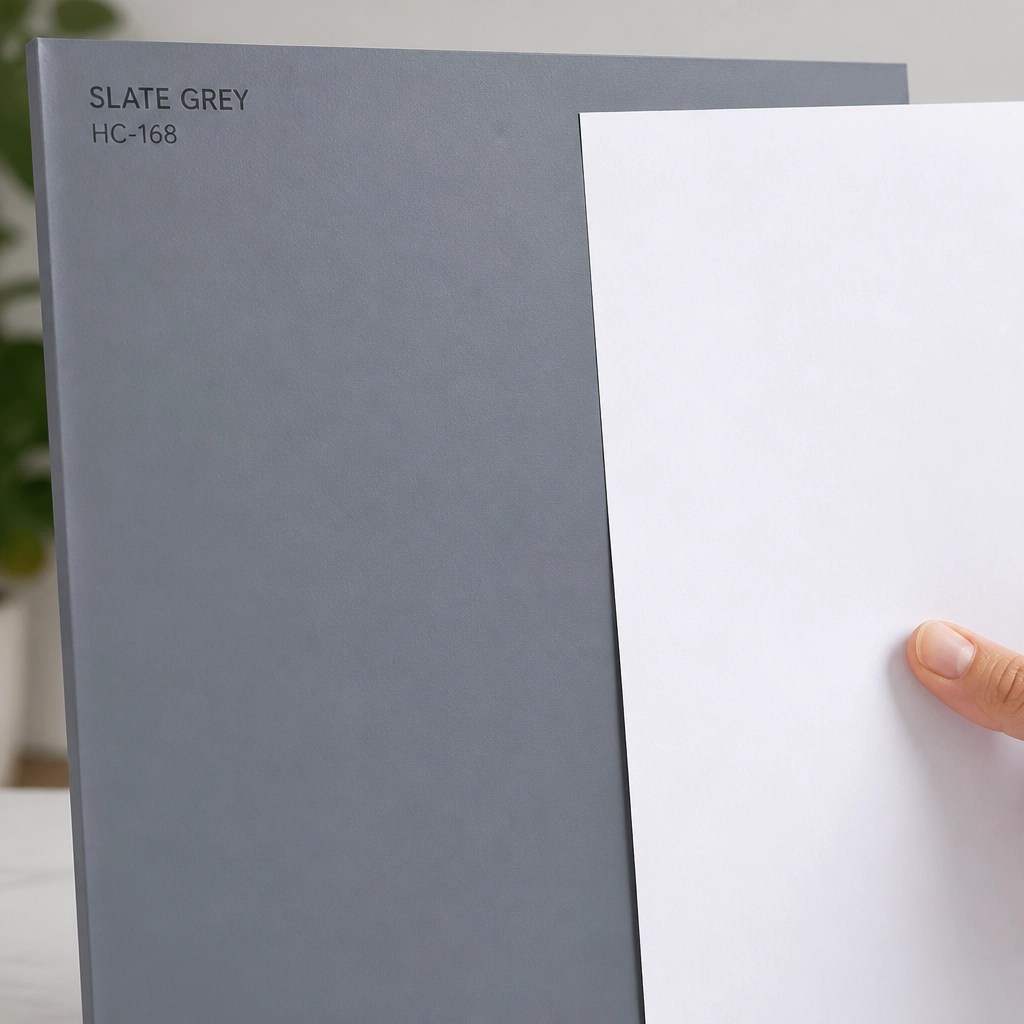
Phase 2, The 50x50cm Rule and the White Paper Secret
Size matters when it comes to paint. A tiny 10cm square doesn't reflect enough light for your brain to process the colour correctly. When you paint a 50x50cm board, you are giving the colour enough "room" to show its true character.
Apply two full coats to your boards. One coat is never enough to show the true depth of the pigment. Let the first coat dry completely before adding the second. This is especially important for the deep charcoals or bright whites often used by house painters Orange NSW for modern renovations.
Once the boards are dry, it is time for the secret weapon: the white paper test. Place a sheet of pure white printer paper next to your sample. Because printer paper is a very "true" white, it acts as a baseline.
Suddenly, that "neutral grey" might look slightly purple. That "warm white" might look surprisingly yellow. This is the moment where you catch the undertones that would otherwise haunt you once the whole room is finished.
Micro takeaways:
- Two coats are mandatory for an accurate colour representation.
- 50x50cm is the minimum size for a reliable test.
- White paper helps you see "hidden" tints like pink, green, or blue.
Using this method helps you narrow down your choices quickly. If a colour looks "off" next to the white paper, it will likely look even worse when it covers four walls.
Phase 3, The 4 Stage Light Test in Orange NSW
Light is the most important factor in how a colour looks. In Orange, we have a very specific type of light. We get very high-intensity sun in the summer and very flat, cool light during our famous winter months.
You need to live with your sample boards for at least 48 hours. Tape them to the wall and check them at these four specific times:
1. The Morning Glow
Early morning light is usually quite soft and can have a slight blue or cool tint. Check your boards as soon as the sun comes up. Does the colour feel fresh and inviting or does it look a bit "muddy" in the shadows?
2. Midday Intensity
Midday sun is the most neutral light you will get. This is when the colour is at its brightest. If a colour is going to "wash out" and look too white, it will happen now. For our in-house qualified painters on interior painting projects in Orange NSW, this is often the time we use to confirm the primary tone.
3. The Late Afternoon Warmth
This is the danger zone for rooms facing West or North-West. The afternoon sun in the Central West is very warm and orange. It can turn a nice beige into a bright apricot or make a grey look muddy. If you are painting an exterior, this is the most critical time to check your samples. It is also where 45+ years of local experience helps because we know how harsh late afternoon light can be across Orange NSW homes.
4. Night Time Under Lights
Once the sun goes down, your artificial lighting takes over. Check your boards under your normal ceiling lights and lamps. Warm LED globes will bring out yellow tones, while "Cool White" LEDs can make colours look clinical and flat.
Micro takeaways:
- Check samples at four distinct times of day to see the full range of the colour.
- Pay close attention to the late afternoon sun which is very strong in Orange.
- Test under your actual home lighting, not just daylight.

Why Local Experience Matters for Your Colour Choice
Choosing a colour isn't just about what looks good on a Pinterest board. It is about how that colour interacts with the local environment. Orange has a unique climate that affects the longevity and appearance of paint.
Our high altitude means the UV levels are intense. This can cause some colours to fade faster than others, especially on North-facing walls. Having a team with 45+ years of local experience means we have seen how these colours age over decades, not just weeks.
We know which whites stand up to the bright summer sun without blinding you and which deeper tones provide that cozy "Central West" feel during the winter. Because we use our own in-house qualified painters, no subcontractors, we can keep the standard consistent from preparation right through to the final coat, helping your chosen colour look right and last well.
Micro takeaways:
- Orange's high UV levels can affect how paint colours look and last.
- Local expertise helps in choosing colours that suit both summer heat and winter cold.
- Quality application is just as important as the colour itself.
A professional finish starts with professional testing. If you are unsure, asking for a consultation with an experienced team can save you a lot of guesswork. That is one of the advantages of working with in-house qualified painters who handle the job from preparation through to the final coat.

Pro Tip, The Shadow Wall Strategy
If you really want to be sure about a colour, take your sample board and place it on the wall that gets the least amount of light in the room. This is usually the wall with the window on it or a wall in a dark hallway.
Colours always look darker and "heavier" in the shade. If you still love the colour when it is in the darkest corner of the room, you know you have found a winner. If it looks like a black hole, you might need to go one shade lighter on the same colour card.
Final Takeaway
Testing paint properly is all about removing the variables. By using large boards, checking against white paper, and watching the light change throughout the day, you take the "luck" out of the equation. Whether you are doing a small room or a full exterior repaint, these steps ensure that the colour you fell in love with at the shop is the same one that ends up on your walls.
At CWP Painting, we believe that quality workmanship starts long before the first brushstroke. If you need help bringing your vision to life with a team that knows Orange inside and out, backed by 45+ years of local experience and in-house qualified painters, no subcontractors, we are here to help.
If you would like advice on planning your next interior painting project or exterior repaint, CWP Painting can help you test colours properly and choose a finish that suits your home.
Common Questions About Testing Paint
How many coats should I put on my sample board?
Always use two full coats. That gives you a more accurate read on colour depth and finish.
Should I use a brush or a roller for my samples?
Use the same tool planned for the final surface. That gives you a closer match to the finished texture.
Why does my grey paint look blue once it is on the wall?
Grey often carries cool undertones. In Orange NSW light, those undertones can show up more strongly at certain times of day.
Can I just use the small colour chips from the shop?
They are fine for narrowing down options, but not for final decisions. Real paint on a large board is much more reliable.
Does sheen level change the colour?
Yes. Higher sheen reflects more light, while lower sheen tends to soften and deepen the look.

