If you're in a hurry, here's the gist. Start with a steady neutral, test it on large moveable boards, and check it in your home at different times of day. In Orange NSW, bright sun, cool winter light, and room direction can shift colour more than most people expect, so the safest choice is usually the one that looks balanced from morning through to night. If you want extra confidence, CWP Painting brings 45+ years of local experience, in-house qualified painters with no subcontractors, and a strong preference for high-quality Taubmans systems to help you avoid expensive second guesses.
Micro Takeaways
- Start with a reliable neutral base and test it in your actual light.
- Use large moveable sample boards instead of tiny wall patches.
- Check colours in morning, afternoon, and at night under your own lights.
- In Orange NSW, local light can push colours warmer, cooler, or harsher than expected.
Orange and the Central West have a very particular kind of light. Crisp winter days can make colours look cooler and cleaner than you expected, and hot western sun can turn “safe” neutrals into something harsher by late afternoon. If you pick colours without testing them properly in your light, you can end up repainting sooner than you wanted.
This guide is focused on one thing, choosing paint colours that look right in Orange and Central West light using a simple, repeatable approach you can actually follow. It is built around what works for residential painting in Orange NSW, not just what looks good on a tiny sample card.
Micro Takeaways
- Local light changes colour more than most sample cards suggest.
- Proper testing helps you avoid repaint regret.
- This advice is built for real homes in Orange NSW, not showroom lighting.
That gives you a more practical way to make a confident decision before the painting starts.
Why light matters more than the swatch, especially in Orange
When you look at colours under bright hardware store lighting, you’re not seeing what you’ll live with. The Central West has strong, directional light, so the same “warm white” can look creamy in one room, slightly grey in another, and almost yellow on a western wall late in the day.
Your goal isn’t to find a mythical “perfect” colour. It’s to choose one that:
- suits the style of your home
- works with your room orientation
- holds steady through the day, and at night under your lighting
- looks right on larger surfaces, not just on a tiny swatch
That’s where experience helps. At CWP Painting, our in-house qualified painters handle the work directly, with no subcontractors, and we’ve been painting homes across Orange NSW for 45+ years. We are also fully licensed and insured, and we keep our pricing clear and transparent so you know what is included before the work begins. Chances are, we’ve already seen how a similar colour behaves in local light. If you like checking credentials before you commit, that’s just common sense, not overthinking. Industry bodies like Master Painters Australia and consumer guidance from NSW Fair Trading can be useful reference points.
Micro Takeaways
- Orange and Central West light is strong and can exaggerate undertones.
- Don’t judge colour under store lighting, judge it in your home.
- Aim for a colour that stays steady and flattering across the day.
- Local experience matters when you’re making a final call.
- Fully licensed and insured painters with transparent pricing give you more confidence from the start.
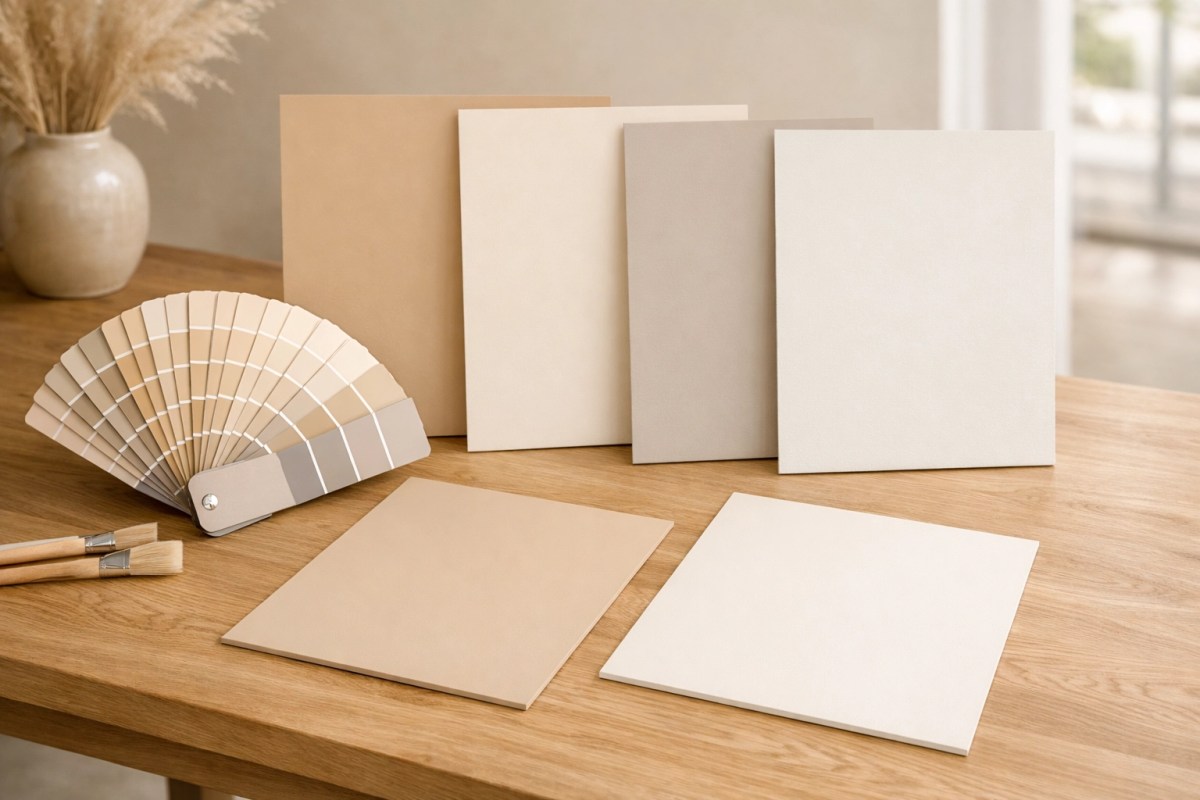
Rule 1 Start with a neutral that can handle real life
If you want longevity and a high-end feel, neutrals are still your best friend. In Orange homes, that usually means choosing colours that stay steady in changing light rather than chasing something that only looks good in one photo.
When we talk about neutrals in 2026, we aren't just talking about beige. We’re talking about
- Sandy neutrals soft beige, muted stone, and warm oat tones that add warmth without making the room feel heavy
- Complex whites whites with just a hint of warmth to take the hard edge off bright light
- Soft warm greys balanced colours that can look calm and tailored when the room suits them
- Warm industrial textures colours that sit well with brushed metals, natural timber, concrete-look finishes, and earthy fittings
- Luminous Blue accents a fresher 2026 shift that works best as a controlled feature, not your whole main palette
You’ll notice this is a bit different from the old greige-heavy look. In 2026, there’s a clearer move toward Luminous Blue as an accent direction and warm industrial textures as a materials trend. The great thing about that shift is that you can use it without repainting your whole house in something risky.
If you want a practical product starting point, Taubmans Endure is a strong option for residential repaint work because it gives you durability and a quality finish. Taubmans is our preferred high-quality brand for this kind of work. You can also review product information directly through Taubmans. Obviously, the right system still depends on the room, the surface, and the prep.
Why this works: Neutrals let your furniture, artwork, timber tones, and landscaping do the talking. They also make spaces feel larger and more cohesive. If you're planning a repaint, start with a neutral base, then fine-tune from there, especially if you’re doing a full interior repaint or exterior repaint.
Micro Takeaways
- A neutral base is usually the safest long-term choice inside and out.
- Warm sandy shades, muted stone, soft beige, and creamy neutrals are easier to live with long term.
- Taubmans Endure is worth considering for quality residential repaint work.
- Complex whites and greiges tend to stay liveable as your style changes.
If you want a colour scheme that still feels right in a few years, start with a solid neutral family. You can always add personality later without repainting the whole place.
Rule 2 The North vs South Light Test (Orange edition)
This is the rule most people miss, and it’s the one that saves you from 90% of “why does it look wrong?” moments.
In the Southern Hemisphere, window direction changes the temperature of light in the room:
-
North-facing rooms (warm, consistent):
North light is stronger and warmer. In Orange, that can make warm whites and creamy neutrals look more yellow—especially on clear days. In many north rooms, slightly cooler whites and greys can look cleaner and more balanced. -
South-facing rooms (cool, soft, sometimes flat):
South light is cooler and can read a bit blue/grey. Add Orange’s crisp winter light and a cool white can look icy fast. South rooms usually benefit from warmer neutrals (a hint of cream/taupe) to keep the space feeling inviting.
Pro Tip: If you’re choosing between two “almost identical” neutrals, the right one is usually the one that looks least dramatic in the room. Drama is what you get sick of.

Micro Takeaways:
- North-facing rooms often suit slightly cleaner/cooler neutrals.
- South-facing rooms usually need a bit more warmth to avoid feeling cold.
- Always test samples in the actual room they’re meant for.
Micro Summary: This one step saves a lot of second-guessing. If you match the colour to the room’s light, you’re already ahead of most repaint mistakes.
Rule 3 Use dark colours carefully in Central West sun
Dark exteriors can look very sharp, especially on weatherboards and homes where you want contrast and definition. But in Orange, the hot western sun is the deal-breaker most people don’t factor in.
Dark colours absorb heat. On western-facing walls, that can mean:
- more movement in the substrate
- faster fading and chalking in harsh sun
- a finish that looks uneven earlier than you’d expect
The practical approach is to use darker colours as accents, front doors, gables, window sashes, trim lines, and verandah details, then keep your main wall colour in a safer mid or light tone that can handle sun and weather better. For one thing, that usually gives you the look without taking on the same long-term risk.
If you’re repainting outside, premium systems matter here too. Products in the Taubmans Endure range can be a smart fit for durability on residential exteriors when the prep and specification are done properly.

Micro Takeaways
- Dark colours are usually best as accents in the Central West.
- Western sun can speed up fading and make timber move more on dark walls.
- Use darks on doors, trim, and details, not necessarily the whole exterior.
Dark colours can look excellent here, but they need to be used with a bit of common sense. A strategic accent usually gives you the look without the same long-term risk.
Rule 4 Use moveable sample boards, not tiny wall patches
Most people paint three small squares on one wall and hope for the best. The problem is, your eye starts comparing colours to each other, not to the room, the flooring, and the light.
The CWP way to test, simple and reliable
- Paint large boards Use cardboard or MDF, around 600mm x 600mm or larger. Two coats, same product you’ll use on the wall.
- Move the boards Check near the window, deep in the room, behind furniture, and next to skirtings.
- Stand back Look from the doorway and from where you actually sit.
- Exterior check Hold boards against brick, stone, or weatherboards, then check them in sun and shade.
This is the sort of practical process that saves you from expensive second-guessing. It also suits how our in-house qualified painters work on residential jobs across Orange and the Central West, methodical, tidy, and based on what the surface is actually doing. With 45+ years of local experience and no subcontractors, we keep the process consistent from start to finish. It also helps when your quote and scope are clear from the beginning, because transparent pricing makes it easier to compare options properly and avoid surprises later.

Micro Takeaways
- Small wall squares can be misleading because you compare patches, not the room.
- Big moveable boards show the colour in sun, shade, and different angles.
- Check boards next to fixed elements, floors, benchtops, brick, roofing.
If you only change one part of your colour-picking process, make it this. Big sample boards give you a much more honest read before you spend real money.
The CWP Colour Selection Checklist (Proof Engine)
Before you commit, run your shortlist through this checklist. It’s designed to catch the exact issues that show up in Orange/Central West light.
1) Room direction, north, south, east, west
- Have you confirmed the room’s main window direction?
- Does the colour’s undertone suit that direction, warmth for south, balance for north?
2) Flooring and fixed elements compatibility
Take stock of anything you’re not painting.
- Flooring, timber tone, carpet warmth, tiles
- Benchtops, splashbacks, cabinetry
- Brick, stone, roof tiles, gutters, aluminium windows
- Do the undertones agree, not just “same colour family”?
3) Undertone test vs a plain white sheet
This is the quickest way to reveal what’s really in the colour.
- Hold a clean white sheet of paper, or white fabric, next to the sample board
- Can you see a clear lean, pink or red, yellow, green, or blue or grey?
- If it leans green or blue and the room is south-facing, have you warmed it up?
4) Sun, shade, night testing, non-negotiable
Orange light changes through the day, and interiors change again once lights come on.
- Checked at 10am so there is softer morning light
- Checked at 2pm so there is stronger, clearer light
- Checked at late afternoon especially western sun
- Checked at night under your actual globes, warm vs cool LEDs change everything

Micro Takeaways
- Confirm room direction first, it changes how “warm” or “cool” a colour reads.
- Check undertones against a clean white sheet. Undertones are the trap.
- Test at multiple times, morning, midday, late arvo, and under lights at night.
A checklist sounds simple, but it catches the mistakes that usually cause regret. If a colour passes these tests, chances are it’ll still look right once the whole room is done.
How to use 2026 trends without boxing yourself in
It’s tempting to look at Pinterest or Instagram and want the exact "Colour of the Year." But trends move fast. What is in today can look dated surprisingly quickly once it’s across a whole room or façade.
That said, not every trend is a bad idea. Some 2026 looks can work really well when they’re used properly. One of the safer directions this year is still a Golden Sands palette, with warm sandy shades, muted stone, soft beige, and creamy neutrals showing up in more homes. Alongside that, there’s also a noticeable shift toward Luminous Blue as a feature colour and warm industrial textures in finishes and styling.
In practical terms, that might mean:
- a steady neutral wall colour
- deeper blue on a front door, study nook, powder room, or cabinetry detail
- warm industrial elements like textured timber, aged brass, black hardware, or concrete-look surfaces
Two design approaches that still need careful testing are
- Color Drenching using the same hue across walls, trims, and sometimes doors for a wrapped, cohesive look
- Color Capping painting the ceiling a darker tone to create depth and a more designed feel
Both can look excellent, but they’re best treated as deliberate design choices rather than defaults. In Orange light, they need proper testing first because the effect can feel stronger in real life than it does online.
Micro Takeaways
- Trend colours can date quickly, but some trend applications can still work if they’re used carefully.
- A Golden Sands palette is easier to carry across a full home than harder trend colours.
- Luminous Blue is better used as a feature than a whole-house main colour.
- Warm industrial textures work best when the base palette stays steady.
- Color Drenching and Color Capping can look polished, but they need proper testing.
Trends aren’t the enemy. The real issue is using them without checking whether they suit your home, your light, and how long you want the result to last.
Rule 5 Keep the base classic, then layer trend colour where it makes sense
Obviously, you can chase trends. The issue is that Orange and Central West light can exaggerate trendy undertones, especially cooler colours, so the look can date quickly or feel harsher than it did online.
A safer, more premium way to approach it is
- keep your main wall colour classic and neutral
- use 2026 trends in a measured way if you want a more designed look
- bring in Luminous Blue through a front door, feature joinery, soft furnishings, or one small area you can repaint later
- support that with warm industrial textures like timber, metal, leather-look finishes, or stone-inspired elements
- use durable products like Taubmans Endure where you want the finish to hold up well over time
That way your home stays timeless, but still feels current.
Micro Takeaways
- Keep main wall colours classic so the home stays flexible.
- Use trend colours in décor or one small feature area if you want less risk.
- Luminous Blue works better as a controlled accent than a default whole-room choice.
- Warm industrial textures help trend colours feel more grounded and easier to live with.
- Golden Sands style colours work best when they support a steady base.
- If you’re unsure, test again. Rushing is how you end up repainting.
The sweet spot is a classic base with a few smart trend moves layered in. That gives you a home that feels current now without boxing you in later.
Getting the result right the first time
Good colour selection is only part of the job. Proper prep, a suitable paint system, and tidy application all matter if you want the finish to look better and last better.
That’s where a professional team helps. At CWP Painting, all work is completed by our in-house qualified painters, with no subcontractors, and we’ve been working across Orange NSW and the Central West for 45+ years. We are fully licensed and insured, and we keep our pricing transparent so you know what the job includes before work starts. We focus heavily on residential repaints, use high-quality Taubmans systems where appropriate, and keep the process clear, practical, and low-stress for homeowners.
Micro Takeaways
- A great colour can still fail if the prep or system is wrong.
- In-house painters give you better consistency across the job.
- Local experience helps with colour choices, timing, and product selection.
- Fully licensed and insured painters help reduce risk.
- Transparent pricing makes it easier to plan properly.
- Residential repaints need both presentation and durability.
Pro Tip
Always test your colour swatches on both the southern and northern walls of the same room. The natural light in the Central West is famous for shifting, and what looks like a warm "greige" on one side can turn into a cold blue-grey on the other as the sun moves.
Final Takeaway If you want your home to look right in Orange light and still feel right a few years from now, keep the main palette steady, test properly, and use products and painters you can trust.
If you’re weighing up a residential repaint in Orange or the Central West, I’m happy to help you narrow down colours before you commit. Get in touch with us at CWP Painting and we’ll give you practical advice based on your home, your light, and the result you want.
FAQ Choosing Paint Colours in Orange NSW
Q What paint colours work best in Orange NSW homes?
A. In most Orange homes, a classic neutral base works best because it stays steadier in crisp winter light and strong afternoon sun. Warm sandy shades, muted stone, soft beige, and creamy whites are usually safe long-term choices.
Q Is Taubmans Endure a good choice for residential painting?
A. It can be. Taubmans Endure is a strong option for many residential repaint projects because it offers durability and a quality finish. The right product still depends on the surface, the location, and the full paint system.
Q What is the 2026 shift toward Luminous Blue?
A. It’s a move toward fresher blue accents rather than heavy all-over grey or greige schemes. In most homes, it works best on smaller features like doors, cabinetry, or styling elements rather than the main wall colour.
Q What do warm industrial textures mean in home colour schemes?
A. It usually means pairing paint colours with finishes like natural timber, aged metal, brushed brass, black hardware, concrete-look surfaces, and earthy textures. These elements help a palette feel current without making it look cold.
Q Should I choose warmer or cooler whites for a north-facing room?
A. North-facing rooms get warmer, stronger light, so slightly cleaner whites often look more balanced. Very warm whites can lean yellow in full sun.
Q Why do colours look different in south-facing rooms in the Central West?
A. South light is cooler and can read a bit blue or grey, especially on clear winter days. Warmer neutrals usually keep the room feeling more inviting.
Q Is it a bad idea to paint a whole exterior a dark colour in Orange?
A. It can be risky on walls that cop strong western sun. Dark colours absorb heat, which can increase movement and speed up fading, so they’re often better as accents on doors, trim, and sheltered details.
Q What’s the best way to test paint colours before committing?
A. Paint two coats on large moveable boards, around 600mm x 600mm, then check them around the room and outside in sun and shade. It’s far more reliable than small wall squares.
Q What times of day should I check my paint samples?
A. Check at 10am, 2pm, late afternoon, especially western sun, and at night under your actual lighting. If it only looks good at one time, it’s not the right colour.
Q Why should I check painter credentials before booking?
A. Because colour choice is only part of the result. It makes sense to check licensing, insurance, experience, and professional standards. Resources like Taubmans, Master Painters Australia, and NSW Fair Trading can help you do that homework.
Q Why choose CWP Painting for a residential repaint in Orange NSW?
A. We’ve been painting locally for 45+ years. We’re fully licensed and insured. All work is completed by our in-house qualified painters, with no subcontractors, and we provide transparent pricing so you know what you are paying for from the start.
Resources & Service Links (CWP Painting)
- Interior Painting Orange NSW
- Exterior Painting Orange NSW
- Commercial Painting Orange NSW
- Body Corporate & Real Estate Painting
- Schools & Childcare Centres Painting
- Contact CWP Painting

